Residential Drug Addiction Treatment and Main Mental Health Solutions at Recreate Ohio
Drug addiction rarely arrives alone. By the time a person or family starts searching for residential treatment, the visible substance use is often only one part of a larger clinical picture. There may be anxiety that has tightened its grip for years, depression that has dulled motivation, panic attacks, trauma symptoms, sleep disruption, grief, relationship strain, or a pattern of returning to substances after every attempt to stop. Effective care has to account for the full person, not just the drug use.
Recreate Ohio, also known as Recreate Behavioral Health of Ohio, is located in Gahanna, just outside Columbus. The facility is part of Recreate Behavioral Health Network and offers detox, residential or inpatient rehab, and outpatient treatment. Recreate describes its Ohio program as providing a full continuum of care, including primary mental health services in a residential treatment setting. For individuals and families in central Ohio who are trying to understand what level of help is appropriate, that combination matters.
Residential drug addiction treatment can create the space needed for stabilization. Primary mental health services can help clarify and treat the emotional and psychiatric symptoms that may be driving or worsening substance use. When these services are available within the same broader treatment setting, care can become more coordinated, more responsive, and less fragmented.
Why residential treatment can be necessary
Not every person with drug addiction needs residential care. Some people benefit from outpatient therapy, medication-assisted treatment, peer support, or recovery housing. Ohio law recognizes the need for a community-based continuum of care for opioid and co-occurring drug addiction, including ambulatory and sub-acute detoxification, non-intensive and intensive outpatient services, medication-assisted treatment, peer support, residential services, recovery housing, and multiple pathways to recovery. That range exists because addiction does not affect every person in the same way.
Residential treatment becomes especially important when a person needs a structured environment to interrupt the cycle of use. In real life, the difference between wanting to stop and being able to stop can be enormous. A person may have strong intentions on Sunday night and be using again by Tuesday afternoon because cravings, withdrawal, conflict, isolation, or access to drugs overwhelms the plan. Residential care reduces some of that immediate pressure by placing the person in a treatment-focused setting where daily life is organized around stabilization, therapy, and recovery work.
For many families, residential treatment is the first time they see their loved one with enough distance from substances to think clearly. Early recovery can be physically and emotionally uneven. Sleep may be poor. Mood may swing. Shame may surface. Cravings may be intense at unpredictable times. A residential setting gives clinicians more opportunity to observe those patterns and respond quickly. It also gives the client a chance to practice new ways of coping before returning to the same environments, relationships, and stressors that surrounded active use.
The word “residential” can sound simple, but clinically it carries weight. It means treatment is not limited to a one-hour appointment or a weekly group. It means recovery is supported across the day, through routines, therapeutic services, and structured care. For someone whose drug use has become deeply embedded in daily life, that structure can be the difference between another short-lived attempt and a more stable beginning.
The role of detox in the treatment pathway
Recreate Ohio offers detox as part of its services. Detox is often the doorway into treatment, particularly when someone has been using substances that can produce withdrawal symptoms. The purpose of detox is not to complete recovery. It is to help a person begin the process of becoming medically and clinically stable enough to participate in treatment.
This distinction is important because families sometimes feel a burst of relief after detox and assume the worst is over. In some ways, the most dangerous immediate period may have passed, but the deeper work has not yet begun. Detox can help clear the fog, but it does not automatically change the reasons a person used drugs, the habits that formed around use, or the mental health symptoms that remain underneath.
A person leaving detox without continuing care may face cravings, emotional distress, and environmental triggers before they have developed the skills and support to manage them. That is why a continuum of care matters. Detox, residential treatment, outpatient services, medication-assisted treatment when clinically appropriate, therapy, peer support, and recovery housing can each play a role at different points. The sequence depends on the individual, the substance involved, the severity of symptoms, co-occurring mental health needs, home stability, and clinical recommendations.
In practice, detox and residential care often work best when they are connected rather than treated as unrelated episodes. The person does not have to retell the entire story from scratch at every turn. The care team can watch how withdrawal, mood, sleep, cravings, and motivation change over time. Those observations can guide the next steps.
Drug addiction and mental health are often intertwined
The phrase “co-occurring disorders” can sound technical, but the reality is familiar to many clinicians and families. Someone uses stimulants to push through exhaustion or depression. Someone relies on opioids after pain, trauma, or emotional distress becomes unbearable. Someone drinks or uses drugs to quiet panic, then finds the anxiety worse when the substance wears off. Someone with untreated trauma feels unsafe in their own body and discovers that substances provide temporary distance from memories or sensations.
Over time, the relationship between drug addiction and mental health becomes harder to untangle. Did depression come before the substance use, or did drug use deepen the depression? Is anxiety a long-standing condition, a withdrawal symptom, or both? Is irritability a personality issue, a trauma response, a sleep problem, or the nervous system reacting to early sobriety? The answer may not be obvious in a first appointment.
That is one reason primary mental health services in a residential treatment setting can be valuable. The treatment team has the opportunity to evaluate symptoms over days and weeks, not only during a single crisis. A client may arrive overwhelmed, guarded, or physically depleted. With structure and support, patterns can become clearer. The clinical picture often changes as sleep improves, withdrawal settles, and the person becomes more able to describe what they have been experiencing.
Treating drug addiction without addressing significant mental health symptoms can leave a person vulnerable. Treating mental health while ignoring active substance use can also fall short. The two conditions can reinforce each other. When care addresses both, the person has a better chance of developing recovery skills that match the actual complexity of their life.
Primary mental health services in a residential setting
Recreate states that its Ohio facility offers primary mental health services in a residential treatment setting. That model speaks to an important clinical need: some people require residential support not only because of substance use, but because their mental health symptoms are significant enough to interfere with daily functioning, safety, relationships, and follow-through.
Primary mental health care in a residential environment can help clients work on conditions and symptoms that may have gone untreated or undertreated. It can also help when the person has been labeled only by their addiction, while depression, anxiety, trauma symptoms, or emotional dysregulation have been overlooked. A setting that recognizes both substance use and mental health concerns is better positioned to build a treatment plan around the real issues rather than a simplified version of them.
The residential setting also creates a different kind of therapeutic opportunity. In outpatient care, a clinician mostly hears what happened between sessions. In residential care, staff may notice patterns as they unfold: how a client handles frustration, whether they isolate after group, how they respond to feedback, whether sleep disruption affects mood, or whether family contact triggers cravings. These observations can help shape interventions in a practical way.
Primary mental health services do not mean every symptom disappears during treatment. Recovery is not that tidy. But identifying symptoms accurately and beginning appropriate care can reduce confusion. It gives the person language for what is happening. It also helps the treatment team plan the next level of care, whether that means ongoing outpatient therapy, medication management, peer support, recovery housing, or another appropriate step.
Evidence-informed therapies used in treatment
Recreate reports that treatment at its Ohio facility may include cognitive behavioral therapy, dialectical behavior therapy, EMDR, medication-assisted treatment, individual therapy, group therapy, family therapy, and couples therapy. Each of these approaches serves a different purpose, and the value lies in matching the method to the person’s needs.
Cognitive behavioral therapy, often called CBT, helps clients examine the connection between thoughts, emotions, behaviors, and consequences. In drug addiction treatment, this can be especially useful because relapse patterns often follow predictable internal scripts. A person thinks, “I already ruined the day,” or “I can’t handle this feeling,” or “No one will know,” and those thoughts can open the door to use. CBT helps slow that process down. It teaches people to test thoughts, identify high-risk situations, and make different behavioral choices before the old pattern takes over.
Dialectical behavior therapy, known as DBT, is often associated with skills for emotion regulation, distress tolerance, mindfulness, and interpersonal effectiveness. Those skills can matter tremendously in early recovery. Many clients do not relapse because they do not understand addiction. They relapse because a feeling becomes too intense and they have no practiced way to survive it without substances. DBT skills can give clients practical alternatives when anger spikes, shame floods in, or conflict feels unbearable.
EMDR, or eye movement desensitization and reprocessing, is commonly associated with trauma treatment. Recreate states that EMDR may be included at the Ohio facility. Trauma and addiction often overlap, and some clients have carried traumatic memories for years while using substances to manage the aftereffects. EMDR is not appropriate for every person at every stage, and timing matters. Stabilization, readiness, and clinical judgment are essential. When used appropriately, trauma-focused work may help reduce the intensity of symptoms that have contributed to substance use.
Medication-assisted treatment can also be part of care. In the context of drug addiction treatment, medication-assisted treatment is one of the services recognized within Ohio’s broader continuum for opioid and co-occurring drug addiction. It can support recovery for certain substance use disorders when clinically appropriate. Medication is not a shortcut and not a substitute for therapy, support, or behavioral change. For some clients, though, it can reduce cravings, support stabilization, and lower the risk of returning to dangerous use. Decisions about medication require qualified clinical assessment, monitoring, and follow-up.
Individual therapy offers privacy and focus. Group therapy offers feedback, accountability, and the recognition that others have lived through similar struggles. Family and couples therapy can address the relational damage that addiction often leaves behind. These modalities work differently, but together they can help a person build insight, skills, connection, and a plan for life after residential treatment.
What families often misunderstand about treatment
Families usually arrive at the treatment conversation tired. They may have spent months or years negotiating, pleading, setting limits, withdrawing support, restoring support, researching facilities, and trying to understand what is true. It is common for relatives to ask one direct question: “Will this work?” The honest answer is more nuanced than anyone wants it to be.
Treatment is not a guarantee. No ethical provider can promise permanent recovery after a single episode of care. Drug addiction is often chronic and relapse risk can remain part of the clinical picture. But treatment can still be profoundly worthwhile. It can interrupt dangerous use, identify mental health needs, start medication when appropriate, teach coping skills, involve family, and connect the person to the next level of support.
A residential stay should not be viewed as a sealed container where everything gets fixed before discharge. It is better understood as an intensive phase within a longer recovery process. The quality of the next step matters. If someone leaves residential care and returns to an unstable environment with no ongoing therapy, no peer support, no medication follow-up when needed, and no plan for cravings, the risk rises. If the person steps down into outpatient care, continues mental health treatment, stays connected to recovery support, and has a realistic plan for triggers, the foundation is stronger.
Families also sometimes underestimate the emotional adjustment that follows treatment. A loved one may be sober but still anxious. They may be honest but still ashamed. They may be motivated but still fragile. Trust may not return quickly. Good treatment can begin the repair process, but families often need their own support and education as well.
The importance of a full continuum of care
Recreate describes its Ohio facility as offering a full continuum of care, including detox, residential or inpatient rehab, and outpatient treatment. A continuum matters because needs change. The level of support that is appropriate on day three may not be the level needed after several weeks. The goal is to match intensity to clinical need without leaving gaps.
A person in active withdrawal may need detox. A person who cannot maintain safety or sobriety at home may need residential care. A person who has stabilized but still needs structure may step into outpatient services. Someone with opioid use disorder or co-occurring drug addiction may benefit from medication-assisted treatment as part of a larger plan. Peer support and recovery housing may help bridge the gap between clinical treatment and daily life.
Ohio’s approach to opioid and co-occurring drug addiction reflects this broad view. The state requires a community-based continuum that includes multiple types of care and multiple pathways to recovery. That framework recognizes something clinicians see every day: recovery is not one service, one door, or one philosophy. It is a coordinated set of supports that should be responsive to the individual.
At the provider level, certification also matters. Ohio treatment providers that deliver substance use disorder treatment must be certified by the Ohio Department of Mental Health and Addiction Services under state law. For patients and families, this is part of the regulatory environment that helps define legitimate treatment services in the state.
How residential care can support safer prescribing and coordination
Ohio’s OARRS system, the Ohio Automated Rx Reporting System, is the statewide electronic database for controlled-substance dispensing information. It is used to support safe prescribing and to help connect people at risk of substance use disorder to resources. In addiction and mental health care, safe prescribing is not a minor administrative issue. It can affect relapse risk, overdose risk, symptom management, and trust between client and clinician.
Many clients entering treatment have complicated medication histories. Some have been prescribed controlled substances appropriately in the past. Some have misused prescriptions. Some have obtained medications from multiple sources. Some are fearful that disclosing medication use will lead to judgment. Others may not remember exact names, doses, or timelines. A responsible treatment process has to sort through these details carefully.
The goal is not to punish people for having a medication history. The goal is to prescribe safely, avoid dangerous combinations, and understand the full clinical picture. In residential treatment, medication decisions may intersect with detox needs, psychiatric symptoms, sleep issues, pain, cravings, and co-occurring disorders. Coordinated care helps reduce guesswork.
Holistic supports and why they can matter
Recreate states that its Ohio facility may provide holistic supports such as yoga and mindfulness, art therapy, adventure therapy, equine therapy, Reiki, acupuncture, chiropractic care, fitness and wellness activities, and nutrition education. These services should not be mistaken for replacements for clinical treatment. Therapy, medical care, medication-assisted treatment when appropriate, and structured addiction treatment remain central. Holistic supports can still play a meaningful role.
People recovering from drug addiction often have to relearn how to inhabit their bodies. Long periods of substance use can disrupt sleep, appetite, movement, stress response, and self-care. Anxiety may feel best addiction treatment Ohio physical before it becomes verbal. Cravings may rise as restlessness, heat, muscle tension, or agitation. Practices like mindfulness, yoga, fitness, or nutrition education may help some clients notice and respond to those signals earlier.
Creative and experiential therapies can reach areas that talk therapy does not always access quickly. Art therapy may help a client express something they cannot yet explain. Equine or adventure-based work may highlight trust, patience, fear, confidence, and problem-solving in real time. Acupuncture, chiropractic care, Reiki, and other wellness-oriented services may be experienced by some clients as calming or supportive, depending on personal preference and clinical appropriateness.
The trade-off is that holistic services need to be integrated thoughtfully. Too much activity can overwhelm a person in early recovery. Too little structure can leave them stuck in rumination. The right mix depends on the client’s symptoms, energy level, medical status, trauma history, and willingness to participate. Good treatment does not simply add services for the sake of variety. It uses them with purpose.
A practical way to think about treatment fit
Choosing treatment can feel urgent, especially when drug use has become dangerous. Families may compare programs quickly and focus on location, availability, cost, or whether detox is offered. Those factors matter, but they are not the whole picture. The best question is not simply, “Is this a good facility?” It is, “Is this the right level and type of care for this person right now?”
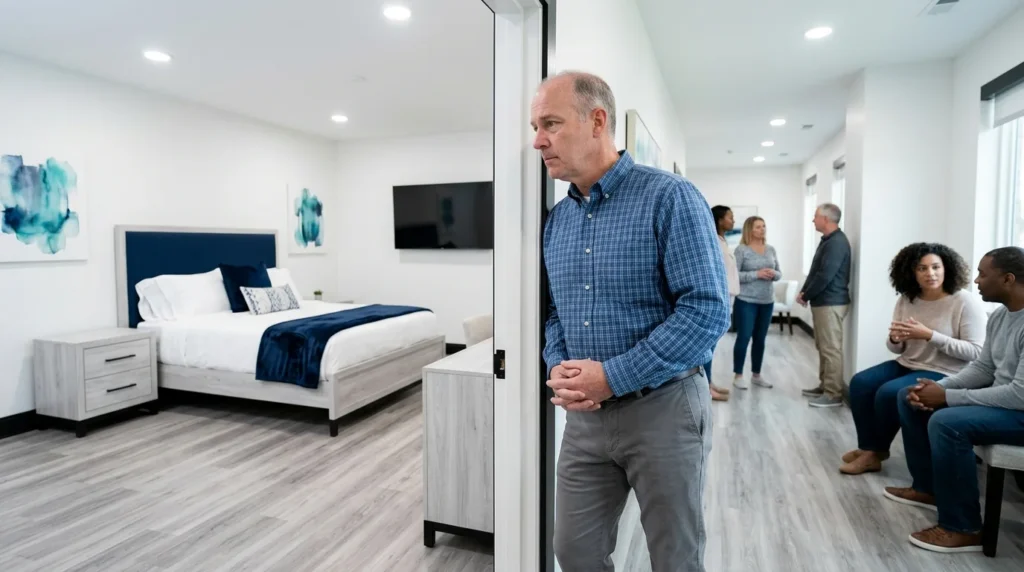
A few considerations deserve careful attention:
- Whether detox is needed before the person can safely participate in therapy and daily programming.
- Whether residential treatment is appropriate because home life, cravings, or psychiatric symptoms make outpatient care insufficient.
- Whether co-occurring mental health symptoms require primary mental health services alongside addiction care.
- Whether medication-assisted treatment should be considered as part of the plan.
- Whether there is a clear path for continuing care after residential treatment ends.
These questions are not meant to replace a clinical assessment. They help families organize their concerns before speaking with a provider. A person with severe withdrawal risk, repeated relapse after outpatient attempts, untreated trauma symptoms, and an unstable living environment may need a different plan than someone with strong home support and a shorter history of use. Treatment fit depends on details.
What a person may begin to learn in residential treatment
Residential treatment is not only about stopping drug use. It is about building the capacity to live differently when stress returns. That work can feel uncomfortable because substances often served a purpose, even while causing harm. They may have numbed grief, softened anxiety, supplied confidence, reduced pain, or created brief relief from self-criticism. Taking them away exposes the problems they were masking.
In a structured setting, clients may begin to identify their personal relapse cycle. For one person, it starts with isolation. For another, resentment. For another, lack of sleep. Someone else may be most vulnerable after contact with a certain friend, after receiving money, or after feeling rejected. These patterns are rarely random. Once they are recognized, they can be addressed.
Clients may also begin to practice direct communication. Addiction often trains people into secrecy, avoidance, and survival-based decision-making. Therapy asks for a different kind of honesty. Group work can be especially challenging because peers may notice inconsistencies quickly. That discomfort can become useful when handled by skilled clinicians. It gives clients a chance to tolerate feedback without fleeing, denying, or using.
Mental health work adds another layer. A client who has always described themselves as “broken” may begin to recognize depression. A client who thought they were simply angry may notice fear underneath. A client who believed they lacked discipline may discover that trauma symptoms have shaped their behavior for years. Naming these patterns does not excuse harmful choices, but it can make change more specific and realistic.
The family’s role during and after care
Drug addiction affects entire households. Parents, spouses, siblings, and adult children often develop their own patterns around the illness. Some become hypervigilant. Some stop sleeping. Some monitor bank accounts, phones, and moods. Some withdraw because the disappointment has become too painful. Others rescue repeatedly and then feel resentful.
Family therapy and couples therapy, which Recreate says Addiction Treatment in Ohio may be part of treatment at its Ohio facility, can help address these patterns. The goal is not to assign blame in a simplistic way. The goal is to improve communication, clarify boundaries, and help loved ones understand what recovery will require after discharge.
Families often need help distinguishing support from control. Support might mean participating in therapy, removing substances from the home, learning about relapse warning signs, or encouraging follow-up care. Control might mean trying to manage every emotion, decision, friendship, or appointment. The first can help. The second often collapses under its own weight.
Boundaries also need to be realistic. A boundary that cannot be maintained becomes another broken promise. A family might decide that the person cannot live at home while actively using drugs, or that financial support will be tied to treatment participation, or that certain behaviors require immediate action. These are difficult conversations. Having clinical support while discussing them can reduce confusion and emotional escalation.
When outpatient care becomes the next step
Because Recreate Ohio offers outpatient treatment as well as detox and residential or inpatient rehab, care may continue at a lower level when clinically appropriate. Outpatient treatment can help clients practice recovery skills while living with more independence. It can also reveal gaps that were less visible in residential care.
The transition out of residential treatment is often delicate. In the facility, routines are structured. Outside, time opens up. Old contacts may reappear. Stressors return. Transportation, work, family obligations, court issues, medical appointments, and financial pressure may compete with recovery. Outpatient care can help the person process these stressors as they happen.
Stepping down does not mean stepping away from support. It means the intensity changes. The work becomes more about applying skills in real conditions. For many people, this phase is where recovery becomes practical: planning weekends, managing paydays, dealing with conflict, attending appointments, and asking for help before a craving becomes a crisis.
Treatment is personal, but it should not be improvised
One of the most important truths about drug addiction treatment is that personalization and structure must work together. A rigid, one-size approach misses the individual. An improvised approach without clinical structure misses the seriousness of the condition. Effective care requires assessment, planning, therapy, medical consideration, mental health treatment when needed, and continuity.
Recreate Ohio’s stated services place it within a broader care landscape in Ohio that values continuum-based treatment for opioid and co-occurring drug addiction. Its Gahanna location near Columbus offers detox, residential or inpatient rehab, outpatient treatment, and primary mental health services in a residential setting. Recreate also identifies a range of therapies that may be used, including CBT, DBT, EMDR, medication-assisted treatment, individual, group, family, and couples therapy, along with holistic supports that may complement clinical care.
For someone seeking help, those details are not just program features. They represent possible answers to real problems: withdrawal that feels unmanageable, cravings that keep returning, depression that will not lift, trauma that keeps intruding, relationships strained by years of fear, and the need for a plan that continues after the first phase of care.
Recovery usually begins with a practical decision. Call. Ask questions. Be honest about the substances involved, the mental health symptoms present, the safety concerns, and the failed attempts that came before. A careful admissions and clinical process can help determine whether detox, residential treatment, outpatient care, or another pathway is appropriate.
Drug addiction can narrow a person’s life until everything revolves around obtaining, using, recovering from, or hiding substances. Treatment begins to widen that life again. Residential care offers space and structure. Primary mental health services help address the symptoms and conditions that may keep a person stuck. A continuum of care gives recovery somewhere to go after the first step. For many people and families, that combination is not merely helpful. It is the beginning of a more stable path forward.